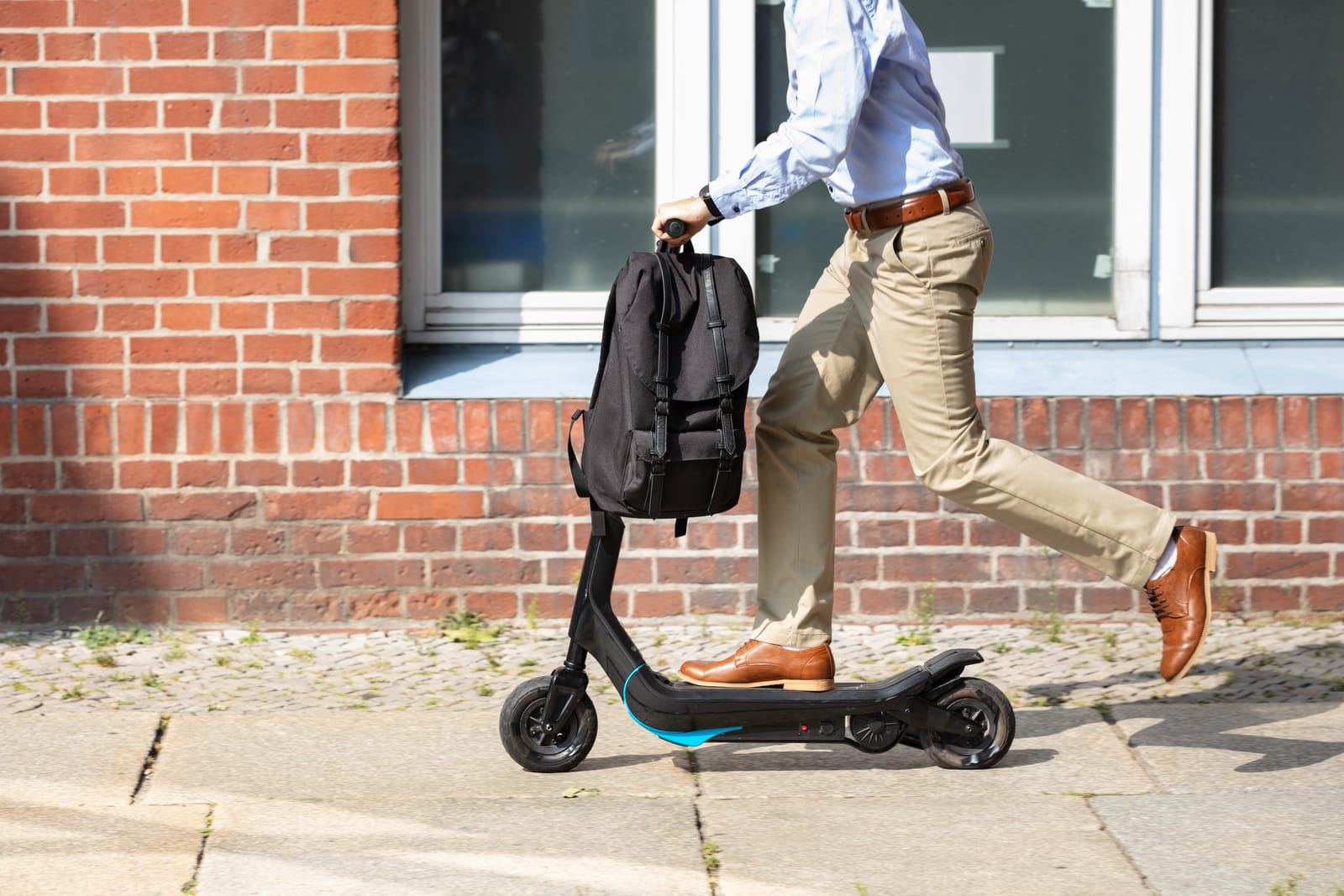
Following a number of serious accidents involving young people on electric scooters, the Irish Government is considering whether electric scooters should be banned.
It took the Irish government years to allow Private Electric Vehicles and in a knee-jerk reaction to appear decisive, they are completely missing the real problem.
Ireland has already tried prohibition.
Until May 2024, electric scooters could not legally be used on public roads. Despite that, anyone living in Dublin knows exactly what happened. The city was already full of scooters. They were used on roads, cycle lanes and footpaths every day. The ban did not stop people buying them. It did not stop people using them. It simply meant that everyone using one was breaking the law.
If a ban did not work before, why would it work now?
The issue has never been the existence of electric scooters. The issue is that the rules are often ignored and enforcement is inconsistent. And that is not scooter problem, it is a general issue that extends to many e-bikes too.
Irish law already limits the maximum speed, sets a minimum age of 16 and defines where scooters may be used. Yet it is common to see children below the legal age riding them. It is equally common to see scooters travelling much faster than the legal limit or being used where they clearly should not be.
When people repeatedly see illegal behaviour without consequences, they begin to assume the rules are optional. That damages respect for the law itself.
Introducing another ban while failing to enforce the current legislation simply repeats the same mistake.
Electric scooters are also part of a much bigger picture.
Across Europe, cities are encouraging forms of transport that reduce congestion, lower emissions and give people practical alternatives to driving. Electric scooters are not perfect, but neither are bicycles, cars or motorcycles. Every form of transport carries risk. The answer has never been to ban transport because some users behave irresponsibly.
Instead, the focus should be on making responsible use the easiest option.
Germany provides an interesting example. Road-legal scooters require insurance and registration, making enforcement straightforward. Ireland should be looking at practical regulatory models like this instead of returning to prohibition.
There is also a gap in Irish legislation. Someone who wants to own a more powerful scooter responsibly has virtually no legal pathway to register, insure and use it. You can buy and insure a motorbike, but you can’t insure a faster scooter. Creating a sensible framework for these vehicles would be far more constructive than pretending they do not exist.
The recent injuries involving children are worrying. However, children under 16 are already prohibited from riding electric scooters on public roads. Those accidents demonstrate a failure to enforce the existing law. They do not demonstrate that responsible adults should lose access to a legitimate means of transport.
The Government has an opportunity to improve safety without turning back the clock.
That means enforcing the existing rules consistently, ensuring the age limit is respected, introducing mandatory helmet use, creating a practical insurance framework for higher-powered vehicles and taking firm action against dangerous riding and illegal modifications.
None of those measures requires banning electric scooters.
Ireland has invested heavily in promoting cleaner transport and reducing dependence on private cars. Electric scooters are one part of that future. Good regulation will make them safer. Prohibition has already been tried and it failed.
The objective should not be to eliminate electric scooters. The objective should be to eliminate dangerous behaviour.