Fuel protests in Ireland have a point. But this is not how to do it.

People in Ireland are right to be angry about fuel prices.

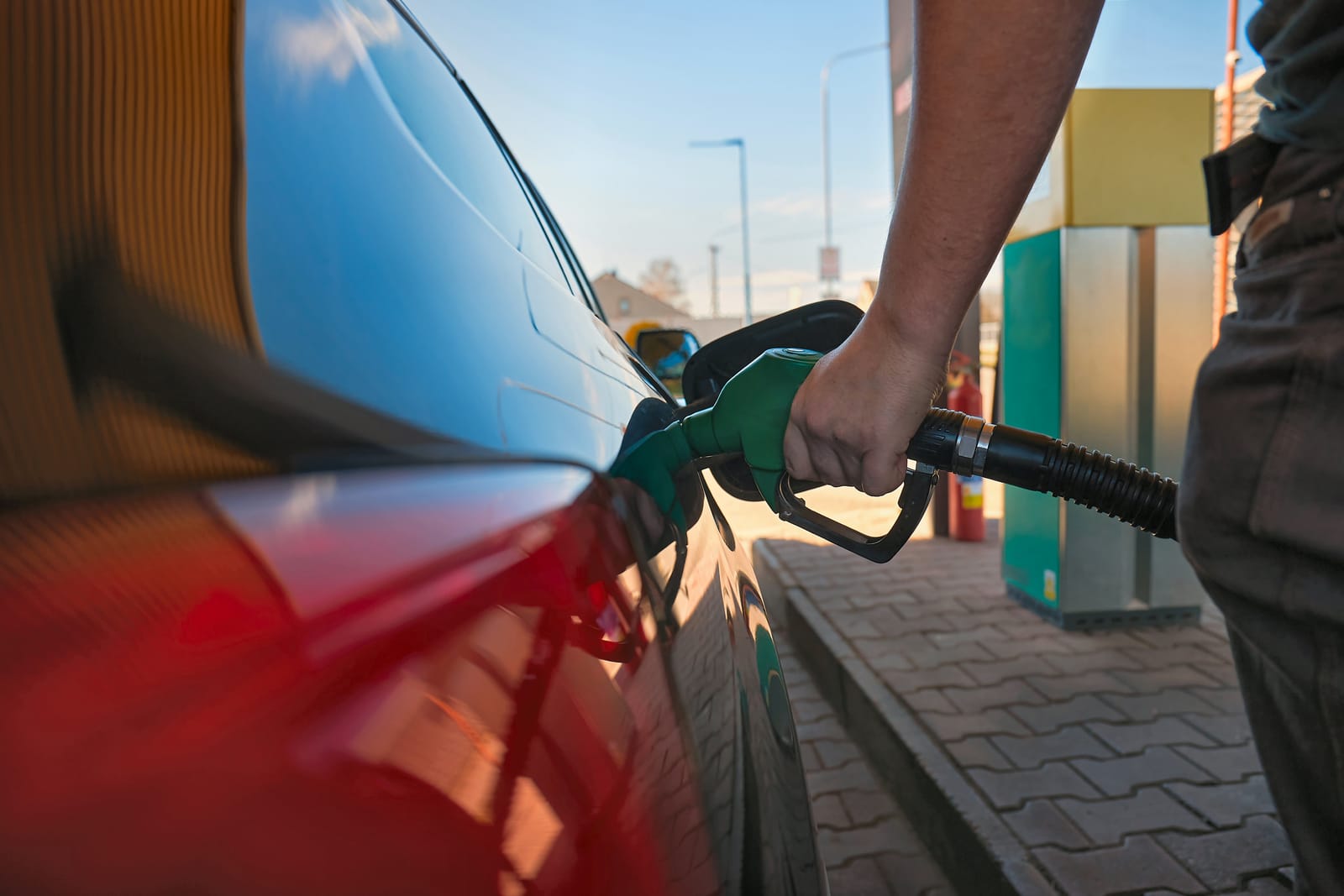
Over the past weeks, petrol and diesel costs have surged to never seen before levels, driven by the wider oil shock linked to the war involving the United States, Israel and Iran. In Ireland, that has triggered protests, road blockades, depot blockades and major disruption in Dublin and beyond. More than 100 filling stations have reportedly run dry, emergency planning has been activated and companies including DPD Ireland have suspended services because of the disruption.

The anger is real and understandable!

Fuel prices are not made up only of the market cost of oil and refining. In Ireland, they also include Mineral Oil Tax, a carbon tax component within that tax and VAT at the standard 23% rate. The Government did already announce temporary cuts from late March, saying the package would reduce the pump price by about 17 cent per litre for petrol and 22 cent for diesel once the excise and levy changes are combined.

So there is a reduction in price that has been enabled by the government, but when the base price rises sharply, the final price at the pump still is punishing. For households, commuters, hauliers, farmers and small businesses, this is not some abstract economic debate. It is immediate and painful.

So yes, the protest is legitimate, even if the Irish government hasn’t caused the rise of the base price.

In fact, one of Ireland’s recurring problems is that people often tolerate too much for too long. Peaceful protest is a healthy part of democracy. It signals that something has gone badly wrong and that people are no longer willing to absorb the cost in silence.

But supporting the right to protest does not mean supporting every form of protest.

And that is where this movement loses me.

A protest that wants to be taken seriously must meet a basic standard. It needs leadership. It needs structure. It needs a clear set of demands. It needs people who can speak for it and negotiate on its behalf. And it needs to know the difference between disruption that makes a point and disruption that turns the public against the cause.

At the moment, this fuel protest appears to be failing that test.

It has largely been organised through social media. It does not seem to have a clear and recognised leadership structure. Its demands are blurred. Some want fuel price caps. Some want further tax reductions. Some want carbon taxes removed. Some claim to speak for farmers or hauliers, while established representative bodies have not clearly owned or led the action. That makes it much easier for political leaders to dismiss the protest and much harder for the public to know exactly what they are being asked to support.

And these details matter, especially when the protest has such a huge effect.

A government cannot realistically negotiate with an anonymous crowd whose demands are shifting and whose authority is uncertain. Grassroots anger is real, but anger alone is not a negotiating position.

Worse still, once a protest begins to choke fuel supply, paralyse roads, disrupt deliveries and interfere with ordinary people trying to work and live, it crosses an important line. Protest should put pressure on power. It should not hold the wider public to ransom.

There is a big difference between a warning protest and an open-ended campaign of disruption. A warning protest says: this is serious, listen now, or stronger action will follow. What is happening at the moment is not disciplined pressure, but it is uncontrolled escalation. And uncontrolled escalation is usually self-defeating. It may create headlines, but it also creates resentment, especially when ordinary workers, patients, families and small businesses are the ones suffering even more.

If this movement wants to succeed, it needs to grow up quickly.

It should appoint credible representatives. It should define two or three clear demands. It should separate legitimate pressure from national self-harm. And it should communicate in a way that allows the wider public to say, “Yes, I support that.”

There is also a more serious policy discussion underneath all this.

If global oil prices surge because of war or geopolitical instability, the Irish Government cannot control the international oil market. But it can control how the domestic tax burden is structured. That is where a more serious proposal could come in.

One sensible idea would be to limit the state take per litre to fixed amounts rather than letting part of the tax burden rise automatically with price. Excise is already fixed per litre, but VAT is percentage-based, so when the underlying price rises, the VAT take rises too. That leaves many people with the understandable impression that the State benefits from price spikes while everyone else suffers.

That does not mean every tax should disappear. It does mean the system should be reviewed so that extraordinary international shocks do not automatically inflate the State’s share while households and businesses struggle.

THAT is a debate worth having.

But it is not helped by chaos without leadership.

So my position is simple. The protesters can be angry. They are right to protest. But they are wrong in how they are doing it. A protest without structure, without accountable leadership and without a disciplined strategy is not strong. It is weak. And once it starts damaging the lives of the very public whose support it needs, it stops being a justified warning and starts becoming sabotage.

Ireland needs serious pressure on serious issues.

It also needs protests that are serious enough to deserve support.

Irish Ferries Rosslare Decision – Mock Shock from TDs

Irish Ferries Rosslare Decision – Mock Shock from TDs

Irish Ferries has announced today that they will probably end the Rosslare to France ferry service because the majority of their customers prefers to get to Dublin directly instead of to Rosslare. Makes a lot of sense to most people! Having a service to a location that is not the favourite location and having to provide infrastructure at that unliked location does not make ANY business sense.

First I thought they are just cancelling the service, but when you read the announcement you find out that instead a Cherbourg to Dublin service will be provided. Not sure if they will still go to Le Havre, though.

So not REALLY a big problem, BUT there is immediate outrage from some of our TDs. Brendan Howlin from Labour finds the decision inexplicable. He either didn’t read the Irish Ferries announcement or doesn’t understand business. OR and that is the actual reason for his “mock” outrage: He is a TD that represents an area close to Rosslare. And yes, he is the TD for Wexford. So he needs to be outraged to have a chance to be elected again.

And the other outraged person? It is Sinn Féin’s Brexit spokesperson David Cullinane and – what a surprise – he is from Waterford. He finds the decision “truly baffling”.

Oddly, both claim that the reason for their shock is the upcoming Brexit! :-O Can anybody explain that? Ferries are still going from France to Ireland, but to Dublin instead of Rosslare. How does Brexit come into that? …unless you are afraid of being accused of “navel gazing” (or being only interested in the topic because it could affect your personally) and therefore invent some “bigger” justification than just defending your own patch.

Less customers in Grafton Street due to LUAS

Less customers in Grafton Street due to LUAS

This is interesting! I had never thought of this or considered it, but after reading an article in the Irish Times about footfall in Grafton Street, I can see how it might make sense. Dublintown, the trader organisation for the City Centre, have identified that there was a drop in footfall by approx. 5.2% and they think the LUAS is the reason.

At first I thought: NONSENSE! The reduction in customer numbers if probably a general and global trend away from retail shops and towards online shopping. The prices retail shops charge are often to hideously high in comparison to online retailers that it really is difficult to keep shopping in the bricks & mortar shops.

But then I thought about how I would use the LUAS (if I could from where I live). If you come from the southern part of Dublin on the Green LUAS line and you work on the North side of the Liffey, then before the Cross City Luas was there, you would have left the LUAS at St. Stephen’s Green and then you would have had to walk from St. Stephen’s Green through Grafton Street to cross the Liffey to get to the Northside. Now, since the Cross City Luas is there, you change Luas trains at St. Stephen’s Green and then go across to the Northside in Luas, without ever putting a foot into Grafton Street.

Not much that can be done about it, but interesting how this new LUAS connection hurts businesses directly but very unintentionally. :-O

Do we live behind the moon? We want Electric Scooters!

Do we live behind the moon? We want Electric Scooters!

I mentioned last week that I was in San Diego recently and I totally appreciated the easy availability of the Uber service, something we are sorely missing in Ireland, just because the National Transport Authority is protecting the Taxi Cartel here for no good reason.

And there is another great thing that San Diego (and many other cities on the USA) offer that falls under the headline of “transport” and that we are still missing in Ireland. San Diego has electric scooters everywhere that can be rented for short trips by anyone via a simple app. There are thousands of scooters everywhere and all you need is register with the service provider (Lime or Bird), download an app and then pay a $1 release charge per trip and 15 cent per minute of a rental charge.

If you use the scooter for a long time, it can get expensive: A 1 hour usage will cost a total of $10. But at 15 miles per hour and with a reach of about 30 miles, you can could certainly cover quite a distance in that hour. In addition, the main target seems to be relatively short trips of closer to 10 minutes than an hour. And for that, using a scooter is a fun way to get from A to B. All this is hugely helped by the fact that you can park the scooter at any street corner (as long as it doesn’t obstruct), so it doesn’t have to be brought to a specific base (unlike the Dublin Bikes, for example).

I zipped around a little and it was a lot of fun!

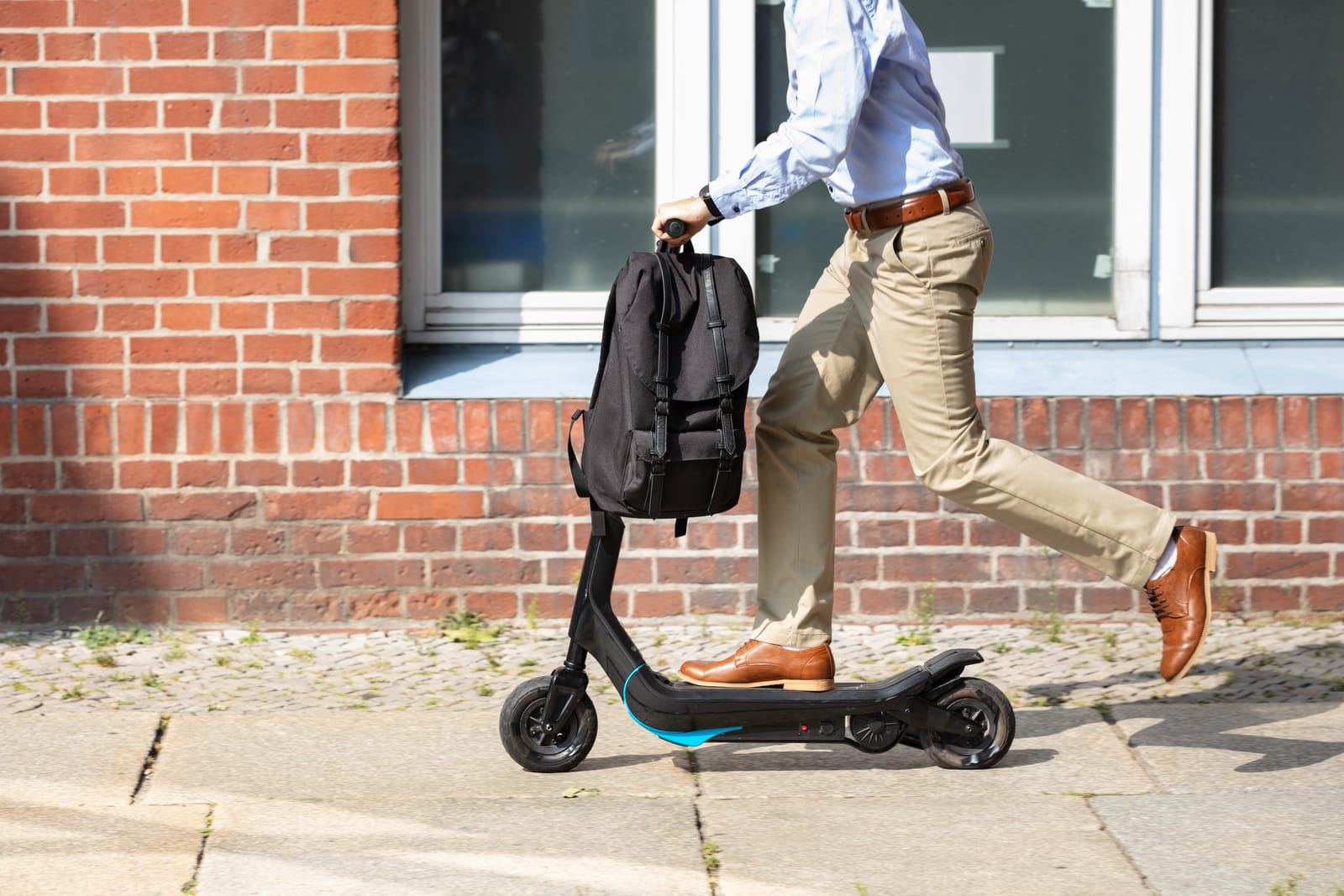
In Dublin we lately see more and more people commuting on Electric Scooters (which they own), but unfortunately using a scooter in Ireland is still illegal and there are currently NO plans in the in the Department of Transport to look into “Personal Electric Mobility Vehicles” (PMV or PEM). We really do seem to live behind the moon!

Electric mobility is looking like the BIG change to our transport system in the future and I mentioned recently that by 2020, the Irish Government would like to have 20,000 electric cars on Irish streets (but will probably fall way short of that). If electric vehicles is the future, then it is high time to start looking at other electric vehicles as well.

We want Uber!!

We want Uber!!

Last week I was in San Diego for 10 days for a training course (and a couple of days holidays added to the end). I had originally planned to use day passes on public transport to get around, but it turned out that the websites painted a nicer picture of the public transport system than it was in reality and it started at the airport when the “promised” facility to buy their equivalent of a LEAP card could just not be found.

So right after arrival we had to change our plans and the options were either Taxi or Uber. The distance from the airport was about 8 miles. With a taxi that would be $24, with Uber it was $16. Not a bad start! And it just continued like that! We did about 10 Uber Trips altogether and had not a single bad experience. All drivers were extremely friendly, some were chatty, some not. All drove well and responsible and all had other jobs and only did a few hours of Uber driving per day or per week. Not once did we have to wait longer than 4 minutes until we were picked up and not once did a driver take “the scenic route” or tried to use any other trick to increase the fare (because they can’t!!).

If you don’t know how Uber operates let me explain it briefly: Uber drivers are private car owners who only need their mobile phone to become an Uber driver. When you book an Uber trip, the customer specifies the start and end point on an app and is told the full price in advance (the driver can’t change it and there are NO surcharges). The app for the driver is a SatNav system and tells the driver exactly how to get to the destination, so the driver just needs to follow the instructions. At the end of the trip you don’t pay by cash or card, instead the app sorts out all payments from your credit card to the driver. So you thank the driver and leave the car. A completely cashless system.

It is just brilliant! BUT we don’t have it and if the National Transport Authority (NTA) is not reigned in soon, they will not allow us to have Uber. Why? Because they are protecting the overpriced and regulated Taxi business. Taxis are outdated and Taxi regulation is harming, not helping customers.

You might say/think that we have Uber in Ireland, but it is a bastardised version of the proper Uber. In Ireland only licensed Taxi drivers are allowed to transport passengers for money, so Uber is just the middle man that connects you with a taxi driver via the app. It has some features of the proper Uber system because you make the contact by app, but the app doesn’t tell you what the price will be and the price is NO different than the normal taxi price. So, Uber in Ireland is not Uber and that is all thanks to the National Transport Authority (NTA).

I think the idea of Uber is brilliant and – without a doubt – it will be the private transport model that will outlive the regulated taxi industry. And in a few years we will look back and wonder “Why, oh Why did we stick to this completely outdated taxi model for such a long time when we easily could have moved to a more modern model?” Yep, I Know, it sometimes feels like living behind the moon! :-O

 
Malcare WordPress Security