Fuel protests in Ireland have a point. But this is not how to do it.

People in Ireland are right to be angry about fuel prices.

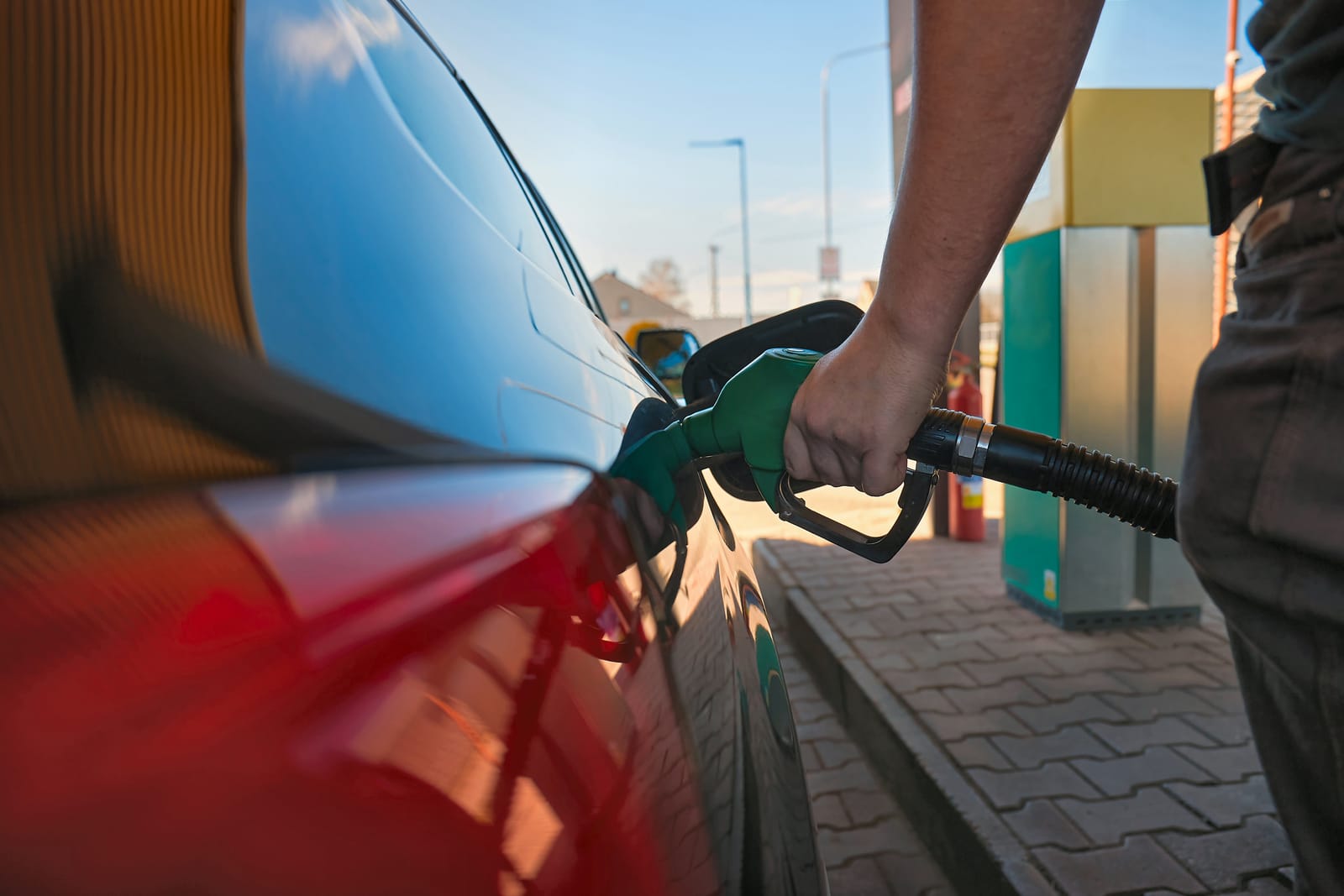
Over the past weeks, petrol and diesel costs have surged to never seen before levels, driven by the wider oil shock linked to the war involving the United States, Israel and Iran. In Ireland, that has triggered protests, road blockades, depot blockades and major disruption in Dublin and beyond. More than 100 filling stations have reportedly run dry, emergency planning has been activated and companies including DPD Ireland have suspended services because of the disruption.

The anger is real and understandable!

Fuel prices are not made up only of the market cost of oil and refining. In Ireland, they also include Mineral Oil Tax, a carbon tax component within that tax and VAT at the standard 23% rate. The Government did already announce temporary cuts from late March, saying the package would reduce the pump price by about 17 cent per litre for petrol and 22 cent for diesel once the excise and levy changes are combined.

So there is a reduction in price that has been enabled by the government, but when the base price rises sharply, the final price at the pump still is punishing. For households, commuters, hauliers, farmers and small businesses, this is not some abstract economic debate. It is immediate and painful.

So yes, the protest is legitimate, even if the Irish government hasn’t caused the rise of the base price.

In fact, one of Ireland’s recurring problems is that people often tolerate too much for too long. Peaceful protest is a healthy part of democracy. It signals that something has gone badly wrong and that people are no longer willing to absorb the cost in silence.

But supporting the right to protest does not mean supporting every form of protest.

And that is where this movement loses me.

A protest that wants to be taken seriously must meet a basic standard. It needs leadership. It needs structure. It needs a clear set of demands. It needs people who can speak for it and negotiate on its behalf. And it needs to know the difference between disruption that makes a point and disruption that turns the public against the cause.

At the moment, this fuel protest appears to be failing that test.

It has largely been organised through social media. It does not seem to have a clear and recognised leadership structure. Its demands are blurred. Some want fuel price caps. Some want further tax reductions. Some want carbon taxes removed. Some claim to speak for farmers or hauliers, while established representative bodies have not clearly owned or led the action. That makes it much easier for political leaders to dismiss the protest and much harder for the public to know exactly what they are being asked to support.

And these details matter, especially when the protest has such a huge effect.

A government cannot realistically negotiate with an anonymous crowd whose demands are shifting and whose authority is uncertain. Grassroots anger is real, but anger alone is not a negotiating position.

Worse still, once a protest begins to choke fuel supply, paralyse roads, disrupt deliveries and interfere with ordinary people trying to work and live, it crosses an important line. Protest should put pressure on power. It should not hold the wider public to ransom.

There is a big difference between a warning protest and an open-ended campaign of disruption. A warning protest says: this is serious, listen now, or stronger action will follow. What is happening at the moment is not disciplined pressure, but it is uncontrolled escalation. And uncontrolled escalation is usually self-defeating. It may create headlines, but it also creates resentment, especially when ordinary workers, patients, families and small businesses are the ones suffering even more.

If this movement wants to succeed, it needs to grow up quickly.

It should appoint credible representatives. It should define two or three clear demands. It should separate legitimate pressure from national self-harm. And it should communicate in a way that allows the wider public to say, “Yes, I support that.”

There is also a more serious policy discussion underneath all this.

If global oil prices surge because of war or geopolitical instability, the Irish Government cannot control the international oil market. But it can control how the domestic tax burden is structured. That is where a more serious proposal could come in.

One sensible idea would be to limit the state take per litre to fixed amounts rather than letting part of the tax burden rise automatically with price. Excise is already fixed per litre, but VAT is percentage-based, so when the underlying price rises, the VAT take rises too. That leaves many people with the understandable impression that the State benefits from price spikes while everyone else suffers.

That does not mean every tax should disappear. It does mean the system should be reviewed so that extraordinary international shocks do not automatically inflate the State’s share while households and businesses struggle.

THAT is a debate worth having.

But it is not helped by chaos without leadership.

So my position is simple. The protesters can be angry. They are right to protest. But they are wrong in how they are doing it. A protest without structure, without accountable leadership and without a disciplined strategy is not strong. It is weak. And once it starts damaging the lives of the very public whose support it needs, it stops being a justified warning and starts becoming sabotage.

Ireland needs serious pressure on serious issues.

It also needs protests that are serious enough to deserve support.

Budget Day is coming…on soft slippers!

Budget Day is coming…on soft slippers!

On Tuesday 09 Oct, the Budget for Ireland for 2019 will be announced. In previous years the media was whipping their readers into a frenzy about what will be increased and what will be decreased and lots of interest groups warned the government about the terrible consequences of the new budget unless they turn it around in time before Tuesday.

But it seems to me that this year the Budget Day is coming on soft slippers. There seems to be a lot less noise about the announcement on Tuesday than in previous years. It could be that it is just my perception, but it also could be that it is quieter because everyone knows that we can’t expect much (good) from the budget, but that it also won’t be tooo bad.

Yes, Cigarettes prices will most likely go up again. Not for health reasons, but just to get taxes.

Petrol and Diesel prices will probably go up as well (and you should fill up your car before midnight on Tuesday if you want to avoid the price hike for the last time).

The 9% VAT rate for the hopsitality sector (hotels and restaurants) will probably go up and that will have a definite bad effect on your pocket if you ever eat out! The restaurants will ALL increase their prices the moment the VAT increase takes effect and the increase will never be limited to the actual VAT increase, but will be generously rounded up. (A 2% increase of that VAT rate should increase a EUR 20 dinner only by 40 cent, but I bet most restaurants will add at least EUR 1 to the price!)

Income tax might fall a bit, but the other tax increases will most likely eat all the savings so that you end up with just a handful of Euro more in your pocket.

DIRT (Deposit Interest Retention Tax), that’s the tax on the interest you earn for your savings, will go down, but that is just part of a many year plan of reducing it, so nothing new. And the Property Tax might go down a tiny bit.

Nothing overly exciting! Maybe that is the reason for the reduced media hype!?

Nobody is allowed to check the President’s spend?

Nobody is allowed to check the President’s spend?

The job of the “Public Accounts Committee (PAC)” is to check the expenditure of all offices, departments and government agencies to make sure that they don’t waste money and that everything is done and accounted for properly.

They are meant to do that regularly, but oddly it seems that the expenditure of the President wasn’t checked for a much longer time.

Now they have decided to do that checking in the next week. But suddenly the “Secretary General to the Government and Accounting Officer for the Office of the President” has a big problem with that check. He thinks it is even unconstitutional because nobody is allowed to check the President. Interestingly the Taoiseach and the leader of the opposition both also are worried about that check.

Odd! If all is well, nobody should be worried and if things are not well, then we should definitely find out BEFORE the presidential election. Don’t you think?

RTE writes about it here.

Less obesity but lots more strokes and dementia!? Thanks, Leo!

Less obesity but lots more strokes and dementia!? Thanks, Leo!

So, our wonderful politicians, led by former doctor and Taoiseach Leo Varadkar decided that they have to protect us from ourselves and force us to be healthier by introducing the Sugar Tax (correctly: Sugar Sweetened Drinks Tax). The Irish Heart Foundation and the Royal College of Physicians of Ireland also supported the tax and claimed it will be a significant step in the fight against obesity.

The goal is to move people away from drinks that contain sugar and while there is the alternative of just drinking water, the probability is HUGE that people will move to diet drinks if they want to avoid paying the significant surcharge on drinks that contain sugar. Drinks containing between five and eight grams of sugar have experienced a price increase of 20 cent per litre and drinks with more than eight grams of sugar per 100 ml cost now even 30 cent more per litre.

All this to FORCE us to be healthier!

But did Leo Varadkar, the Irish Heart Foundation and the Royal College of Physicians of Ireland really do their homework? Does avoiding sugar definitely make us healthier?

Interestingly there is a study that was published by the American Heart Foundation in April 2017, that indicates that our politicians and the two health-sector organisations mentioned above, probably did something really really bad to the people in Ireland!

The study looked at 2888 people for stroke and 1484 people for dementia and checked if sugar-sweetened and artificially sweetened drink consumption had any impact on the risk of suffering a stroke or getting dementia.

And they found that artificially sweetened soft drink consumption was associated with a higher risk of stroke and dementia, while sugar-sweetened beverages were not associated with stroke or dementia!! :-O

So if thanks to Leo and his boys you moved from sugar sweetened drinks to artificially sweetened drinks to save some money, you might not die of obesity, but you are much more likely to die of or at least suffer of a stroke OR lose your mind!

In other words: Adults who had one or more diet drinks a day were 2.9 times more likely to develop dementia and 3 times more at risk of suffering a stroke compared to people who didn’t drink diet drinks. And drinking diet drinks is far worse than drinking drinks sweetened with sugar.

Great job, Leo!! Thanks! :-(

Sugar Tax Postponed

Sugar Tax Postponed

The (totally nonsensical!) Sugar Tax on sparkling drinks with added sugar was planned to kick in on 06 April and maybe you had already planned to buy LOTS of bottles before that day? ;-)

Since a 2 litre bottle will experience a price increase of 60 cent, you can indeed save some money if if you fill the spare room with bottles in the run up to the tax introduction. Only problem is that all these drinks have a best before date and they really change their taste and the level of fizziness after that date. If you have ever tasted expired Coca Cola, you know what I am talking about.

The good news is that you can postpone “The Big Bottle Buy” for a little. The tax will now get introduced on 01 May instead of 06 April. The Department of Finance has decided to check if the tax doesn’t break EU rules and that will take another bit of time.

[You might wonder why I am saying it is “totally nonsensical”? And if you care, here are some of the reasons, but there are too many reasons to go in detail for all of them, so just a list: 1) Unless all sweets are taxed (and maybe fast food as well?) it doesn’t make sense to single out ONE food type. 2) It is very unlikely that a 60cent increase will dramatically change buying behaviour. We have the most expensive price for cigarettes in the whole EU and there are still PLENTY of smokers buying cigarettes completely independent from their financial means. 3) Adding a tax is NEVER a good way to get people to understand what the problem is and to be interested in changing it. Education is the RIGHT way. 4) If you try to “educate” through a price increase, you have to make sure that that increase is felt by the customers. Manufacturers, however, decrease the bottle size to 1.75 or 1.25 litres at the moment so that the consumer THINKS that the price has not increased. The sugar tax increase should have come with an obligation to keep the bottle size at 2 litres as before. 5) Did you know that a sparkling drink with added sugar will NOT experience a tax increase if it is an alcoholic drink? It clearly shows how serious the government is to keep people healthy. Sugar is cool when in alcohol, but sugar in a non-alcoholic drink makes you obese. Dohhh! 6) The final argument for me is that someone who eats an otherwise reasonably balanced diet but occasionally likes a sugary sparkling drink should not be punished by any state for this. Nanny-state is the term that is often used in this context. And if you think the Irish state really cares, then check out the quality of the drinking water in Ireland. ALL countries in Europe accept now that Fluoride in the drinking water is a BAD decision and in some countries a Fluoride-addition is totally forbidden. In Ireland the State still claims that it is healthy. Not true!
Totally nonsensical tax!!]

 
Malcare WordPress Security